As You Act, You Become.
Reality begins and ends with choices. The choices you make are how you choose to interpret reality.
You Are What You Perceive Around You
Your reality is a local phenomena, and there is nothing outside your own perspective. What you perceive is the continuous unfolding of your self. The quality and meaning of your life is in how you interact with others in your perspective, not in what you do for the small part of it that you think is your 'self'. Treat others as you would treat yourself because they are you in a different form.
Opposites Are the Same
Chaos and Order are the same things from different perspectives. Without "hot", "cold" cannot be perceived. Opposites need each other in order to exist because they are, essentially, the same thing.
People Can Self-Regulate, With the Right Incentives
With the right incentives, unequal parties can self-regulate without need for any centralized authority other than that which does nothing other than facilitating others regulating themselves.
Chaos and Order, and Life
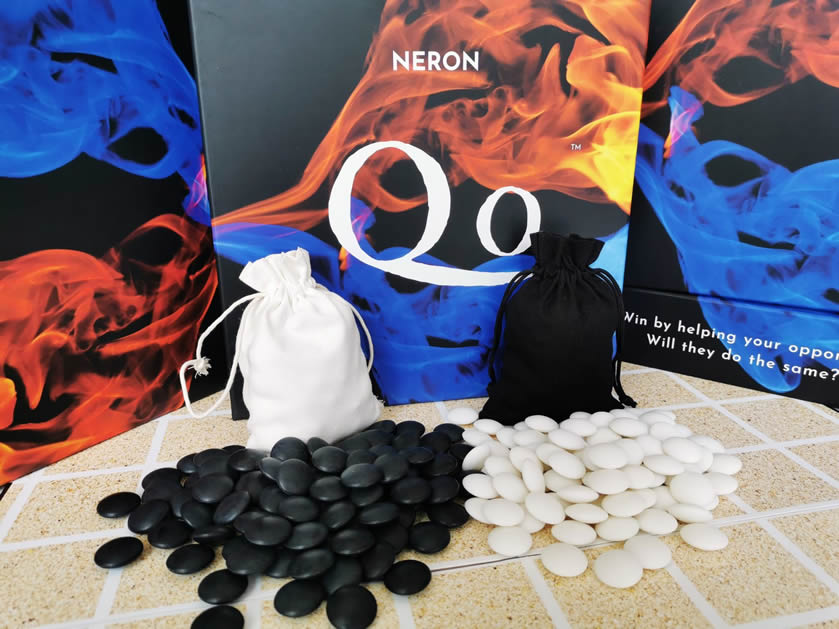
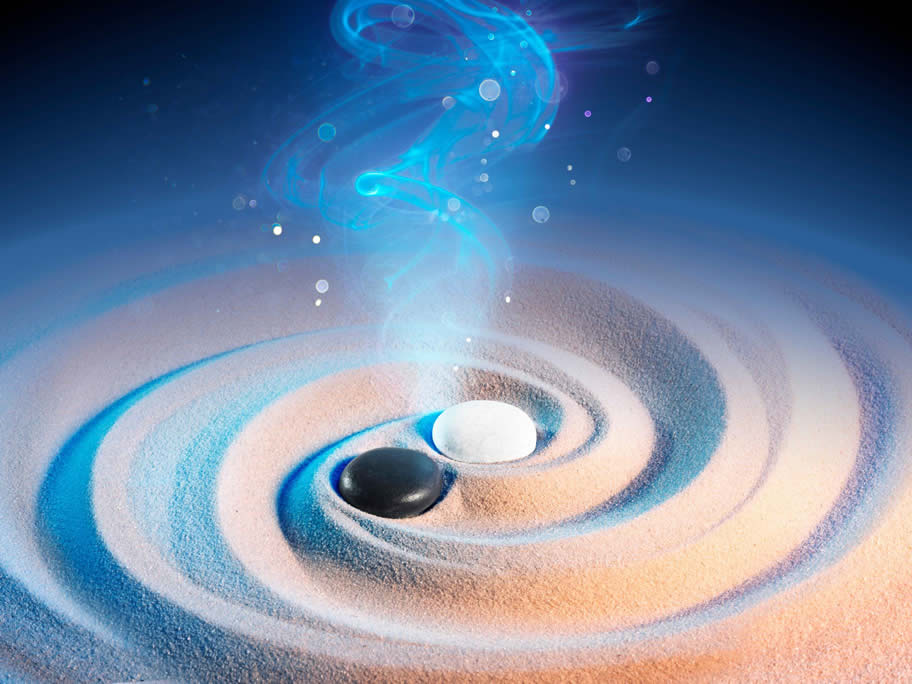
The white lodestones represent Chaos. The black lodestones represent Order. The interaction between the two is the reality that is formed from the equilibrium that both sides seek but that can never truly be found (nor should it be).
Reality comes from your mind. Rather than having direct perception of reality – which would be impossible because it would be absolute truth, which is independent of any perspective – you have something else: a choice in how to perceive it.
We are each free to interpret reality, but oftentimes we also choose to ignore how we are interpreting it.
You are, therefore, your own authority. You are the author of your reality through your interpretation of it, beyond which you cannot sense.
An understanding of how Chaos and Order work together to form reality is the deepest understanding of who and what you really are.
The force of Chaos manifests as space, expansion, heat, freedom, society, emotions, interactions, and so on. The force of Order manifests as time, contraction, cold, rules, logic, relationships, and so on. When the forces interact, reality is formed.
Chaos is an inversion of Order, and Order of Chaos. Emotions are a more sophisticated kind of logic, for example, than the beautiful kind that can be easily explained. In order to understand Chaos, you would need to set your thoughts free from logic and definitions.
The deeper you relate to the things in your perspective the less chaotic, complex, and irrational your reality is. The more you interact with the things in your perspective the more chaotic, complex, and irrational your reality is.
Order allows you to be, but Chaos allows you to become.
Logic and reason allow you to have a greater understanding of reality, but without emotions you would not have a reality at all (for the human race would have disappeared a long time ago). Logic can give us perspective as we relate to reality, but awareness of reality comes from interacting with it through emotions. Something that often appears nonsensical is the very foundation for your senses.
Interactions, and emotions, unfold complexity. The more complex something is the more interactions are needed to perceive it. The parts of yourself that are more simple require less interactions and more relationships (logic) to perceive. Logic and reason fold the complexity up again and makes it simple.
Media and technology are the primary tools to accelerate Chaos and amplify its distribution in populations. They also help to fortify the illusion that your reality is somewhere other than where you are right now. They also exist entirely in your interpretation of reality, as does everything else. You are all that you perceive.
Chaos is the great time destroyer. Its task is to waste your time with distractions so that you do not find out who and what you really are. For if you did, you may BE, and may then break the equilibrium of forces that holds your sense of reality in place. Instead, you continually become, without end.
Chaos is completely natural, and necessary. Without it, there would be no reality. The inversion of Chaos and Order is nature's way of balancing. When we resist nature, problems result
People regulate their inherent Chaos, to a degree, via systems of consensus such as employment, society, government, belief, entertainment, etc. The more in control of one's Chaos (e.g., emotions) one is less dependent one is on society to help regulate their Chaos.
Although the Golden Rule ("Do unto others...") is the primary way that people regulate themselves – and the essential principle that every religion has as well as the concept of law and order – the modern world has broken its ability to regulate society. In the modern world it leads to more Chaos and evil, as people do not need to bear consequences as much as they had previously in close-knit societies. The modern world allows people to be separate from their actions.
When we consider that Chaos and Order are the same, we can be invested in the choices that we make for ourselves and others. A person can, then, more easily see that they are the authority of the reality they interpret. When people see evil or failure it is an interpretation of their own self. If they see goodness or success, they are perceiving themselves in that way.
You are your opponent, and everything else you do not think yourself to be.